Polygon as the Scalable
Operational Layer
for Ternary Moral Logic
A rigorous technical analysis of zkEVM and AggLayer as the high-throughput, privacy-preserving foundation for ethical AI governance
Three-Layer Architecture
Bitcoin as Witness, Ethereum as Court, Polygon as Circulatory System
ZK-Operational Excellence
Validity proofs provide mathematical certainty for moral enforcement at scale
Polygon, through its zkEVM and AggLayer, serves as the high-throughput, privacy-preserving operational layer for Ternary Moral Logic (TML). It functions as a ZK-Rollup that inherits Ethereum's security while enabling orders-of-magnitude higher throughput, making it the "Fast Lane" for processing millions of daily moral decisions.
"By using zero-knowledge proofs, it provides cryptographic certainty for ethical enforcement, allowing AI agents to prove compliance without revealing sensitive data. Positioned as the 'Circulatory System' in a layered stack subordinate to Ethereum ('The Court') and Bitcoin ('The Witness'), Polygon makes a universal, scalable, and economically viable ethical framework for AI operable."
This analysis examines Polygon's role through nine critical dimensions, from its core ZK-Rollup architecture to its position in the broader TML stack, providing a comprehensive understanding of how it enables scalable ethical AI governance while maintaining subordination to foundational constitutional and evidentiary layers.
1. Polygon's Core Function in TML: The ZK-Operational Layer
ZK-Rollup Architecture
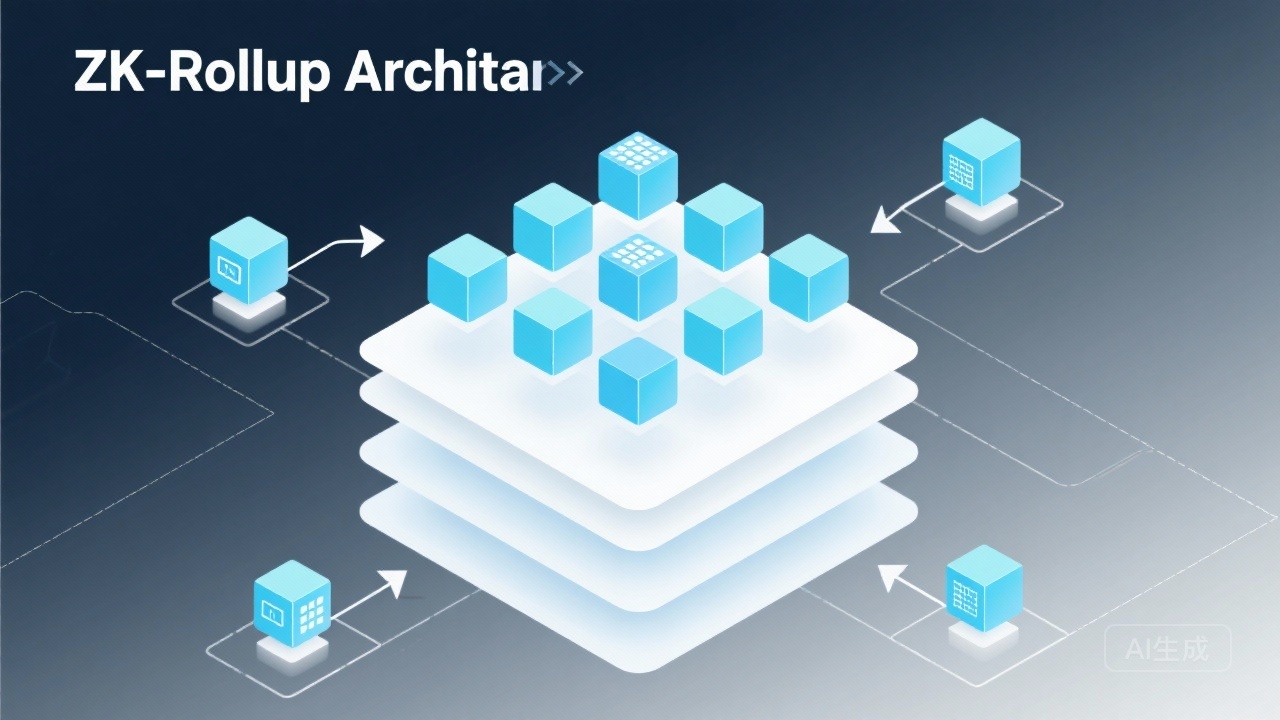
Polygon zkEVM functions as a ZK-Rollup that inherits Ethereum's security while enabling orders-of-magnitude higher throughput. This architecture is critical for TML's requirement to process millions of daily moral decisions from countless AI agents.
The core innovation lies in compressing thousands of TML decisions into a single validity proof, providing cryptographic certainty rather than purely economic certainty through incentives.
Preventing "Ethics-by-Budget"
Polygon's Type 1 prover achieves these efficiencies while maintaining Ethereum security guarantees, making comprehensive ethical logging economically feasible at scale.
Technical Advantages for TML
- Inherited Security: Direct derivation from Ethereum L1 consensus
- High Throughput: Processing capacity for millions of daily decisions
- Low Latency: Sub-second confirmation for real-time ethical checks
- Economic Viability: Prevention of moral load shedding through low costs
2. The Privacy Paradox: Zero-Knowledge Ethics

Proof of Conscience Without Leakage
Zero-Knowledge proofs resolve the fundamental tension between transparency and privacy in AI ethics. An AI can prove compliance with TML rules without revealing sensitive data, proprietary algorithms, or user prompts.
This capability is essential for enterprise adoption, where data privacy and intellectual property protection are paramount concerns.
ZK Protocol Flow
Hybrid Shield Model
TML's Hybrid Shield uses ZK proofs to enable cross-chain redundancy without revealing log contents. The hash of each Moral Trace Log is anchored to multiple blockchains, creating a tamper-evident record that is both private and resilient.
3. Polygon's Position in the TML Stack: The AggLayer
Immutable Time & Evidence"] --> B["Ethereum: The Court
Constitutional Settlement & Enforcement"] B --> C["Polygon AggLayer: The Circulatory System
Unified High-Throughput Execution"] C --> D["Chain A: AI Agent Network"] C --> E["Chain B: DeFi Protocol"] C --> F["Chain C: Enterprise System"] D --> G["Moral Trace Logs"] E --> G F --> G G --> H["Validity Proofs"] H --> I["Ethereum Settlement"] I --> J["Bitcoin Anchoring"] style A fill:#fefcf9,stroke:#6f4530,stroke-width:3px,color:#1f2937 style B fill:#f6f7f6,stroke:#4a5c4a,stroke-width:3px,color:#1f2937 style C fill:#f0d7b0,stroke:#5f735f,stroke-width:3px,color:#1f2937 style D fill:#ffffff,stroke:#a4b3a4,stroke-width:2px,color:#1f2937 style E fill:#ffffff,stroke:#a4b3a4,stroke-width:2px,color:#1f2937 style F fill:#ffffff,stroke:#a4b3a4,stroke-width:2px,color:#1f2937 style G fill:#fcf6ed,stroke:#c68445,stroke-width:2px,color:#1f2937 style H fill:#fcf6ed,stroke:#c68445,stroke-width:2px,color:#1f2937 style I fill:#f6f7f6,stroke:#4a5c4a,stroke-width:2px,color:#1f2937 style J fill:#fefcf9,stroke:#6f4530,stroke-width:2px,color:#1f2937
Bitcoin: The Witness
Immutable temporal and evidentiary anchor providing indelible records for long-term forensic analysis.
- • Highest security and decentralization
- • Append-only ledger for commitments
- • Global trust anchor
Ethereum: The Court
Constitutional settlement and enforcement layer where TML smart contracts define moral logic.
- • Mature smart contract ecosystem
- • Decentralized governance
- • Final arbiter of disputes
Polygon: Circulatory System
Unified high-throughput execution environment enabling coherent moral state across chains.
- • Atomic interoperability
- • Consistency without sovereignty
- • Sub-second finality
AggLayer's Core Innovations
Unified Bridge
The AggLayer's unified bridge acts as a central hub for cross-chain communication, enabling seamless state propagation between different chains while maintaining security guarantees.
Pessimistic Proofs
Novel proof mechanism ensures no chain can withdraw more assets than deposited, providing strong cryptographic guarantees for cross-chain transactions.

4. Smart Contract Execution: The Batcher and the Relay
The Batcher: Aggregating Moral Trace Logs
The Batcher smart contract aggregates large volumes of Moral Trace Logs into Merkle trees, enabling efficient and secure storage on Ethereum mainnet.
Enforcement Relays: Handling Sacred Pauses
Enforcement Relays manage high-frequency State 0 signals, enabling immediate halting of AI systems while awaiting L1 settlement.
Safety Mechanisms and Backup Systems
Timelock Protection
A 10-day timelock delay on contract upgrades provides an escape hatch for the community to respond to malicious changes.
Security Council
Multi-signature committee can implement emergency upgrades to address critical vulnerabilities while remaining accountable to the community.
5. Performance, Latency, and Economic Viability
| Metric | Polygon zkEVM | Starknet | Optimism |
|---|---|---|---|
| Latency | Sub-10ms (proof validation) | 500ms (transaction latency) | 250ms (block time with Flashblocks) |
| Throughput | Not specified in sources | 2,630 UOPS (peak), 273 UOPS (sustained) | 130 TPS (average) |
| Cost | $0.02 per hash anchor | <$0.001 (average gas fee) | $0.17 (average transaction cost) |
| Security Model | ZK-Rollup (Validity Proofs) | ZK-Rollup (STARK Proofs) | Optimistic Rollup (Fraud Proofs) |
| Finality | Fast on L2, L1 finality on proof submission | Fast on L2, L1 finality on proof submission | Delayed (7-day challenge period) |
Economic Viability as Moral Requirement
Preventing Moral Load Shedding
When ethical enforcement costs are negligible, there is no economic incentive to bypass safety measures. This removes the "ethics-by-budget" problem where safety checks are disabled to save money.
Scalable Ethics as Prerequisite
Universal ethics requires a system that can handle millions of decisions daily without fragmentation. Polygon's scalability enables consistent enforcement across diverse AI applications.

6. Trust Model: Validity Proofs vs. Optimistic Assumptions
| Feature | ZK-Rollups (Polygon zkEVM) | Optimistic Rollups (Arbitrum, Optimism) |
|---|---|---|
| Trust Model | Validity Proofs (Cryptographic) - Every batch accompanied by zero-knowledge proof mathematically proving correctness | Fraud Proofs (Game-Theoretic) - Transactions assumed valid by default with 7-day challenge period |
| Finality | Fast Finality - Once validity proof verified on L1, transactions are final and irreversible | Delayed Finality - Transactions only final after challenge period expires without successful fraud proof |
| Security | Mathematical Guarantees - Based on cryptography. Secure as long as underlying primitives are sound | Economic Guarantees - Relies on assumption that at least one honest party monitors and challenges fraud |
| Cost | Higher Proving Costs - Generating zero-knowledge proofs computationally intensive but amortized over many transactions | Lower Operational Costs - No proofs required upfront, making transaction processing cheaper for sequencer |
ZK-Rollups: Mathematical Finality
ZK-Rollups operate on "prove first, trust later" principle. Every transaction batch is processed by a prover generating a cryptographic proof that mathematically guarantees correctness.
Optimistic Rollups: Game Theory
Optimistic systems assume transactions are valid by default, relying on economic incentives for users to monitor and challenge fraudulent activity during a 7-day window.
Why TML Requires "Math Over Game Theory"
For high-stakes moral enforcement, particularly the "Sacred Pause" mechanism, TML cannot afford to rely on probabilistic assumptions or economic games. The decision to halt an AI system requires immediate, mathematically verifiable certainty.
Irreversibility Requirements
High-stakes moral enforcement cannot depend on the hope that someone will be watching and will be paid to act. It requires immediate, irreversible finality.
Cryptographic Certainty
Validity proofs provide mathematical guarantees that are not subject to market fluctuations or user vigilance, ensuring consistent and reliable moral enforcement.
7. Governance and Capture Risk
Centralization Risks
Sequencer Centralization
Current implementation has Polygon Labs operating the Sequencer and Aggregator, creating potential single points of failure and censorship risk.
Governance Influence
Upgradeable contracts controlled by Polygon Labs create risk of protocol changes that may not align with community interests.
Capture Vectors
Malicious actors could target centralized operators to gain control of network operations and state manipulation.
Mitigation Strategies
10-Day Timelock Delay
All contract upgrades require 10-day advance notice, providing community review period and escape hatch.
Security Council
Multi-signature committee from Ethereum community handles emergency upgrades while remaining accountable.
Ethereum Finality
ZK-Rollup architecture ensures ultimate truth resides on Ethereum, preventing moral history rewriting.
Why Polygon Cannot Rewrite Moral History
The layered TML architecture ensures that even if the Polygon Sequencer were compromised, the moral history of AI decisions remains immutable and verifiable through higher-order layers.
8. Limitations and Deliberate Constraints
Explicit Boundaries
While Polygon excels as an operational layer, the TML framework imposes deliberate constraints to maintain system integrity and legitimacy.
Performance Must Never Outrank Legitimacy
A core principle of TML architecture: operational efficiency must never compromise constitutional legitimacy. While Polygon provides high throughput and low latency, these advantages cannot override the fundamental requirements for security and integrity.
Priority Hierarchy
- Constitutional legitimacy (Ethereum)
- Evidentiary integrity (Bitcoin)
- Operational efficiency (Polygon)
Design Trade-offs
- • Temporary performance reduction acceptable for security
- • Disputes resolved in favor of caution and legitimacy
- • Operational layer remains subordinate to governance layers
The Necessity of Layered Accountability
TML's three-layer architecture distributes trust across independent systems, ensuring resilience to failure and attack. No single platform or entity is trusted with all system functions.
9. Conclusion: Polygon as the Proving Engine of TML
The Proving Engine for Ethical Systems
Polygon zkEVM serves as the specialized computational backbone that transforms abstract moral principles into concrete, verifiable proofs. It provides the mathematical certainty required for high-stakes ethical enforcement at unprecedented scale.
By compressing millions of moral decisions into succinct validity proofs, it enables a "Fast Lane" for TML where ethical checks can be performed in near real-time without sacrificing cryptographic certainty.
The Circulatory System Without Sovereignty
The AggLayer functions as the connective tissue that maintains a coherent moral state across a network of AI agents without granting any single entity sovereign control. It enables coordination and execution while remaining subordinate to higher-order governance layers.
This architecture ensures that moral enforcement scales horizontally across diverse applications while preserving the constitutional legitimacy established by Ethereum and the evidentiary integrity anchored to Bitcoin.
The Division of Labor in TML
Ethereum Decides
The "Court" that defines constitutional rules and serves as ultimate arbiter of disputes
Bitcoin Remembers
The "Witness" that preserves immutable history and provides evidentiary integrity
Polygon Enables
The "Circulatory System" that provides privacy, speed, and economic viability at scale
"Polygon ensures ethical AI governance is private, fast, and economically viable enough to function - powerful precisely because it is not sovereign."
-Lev Goukassian